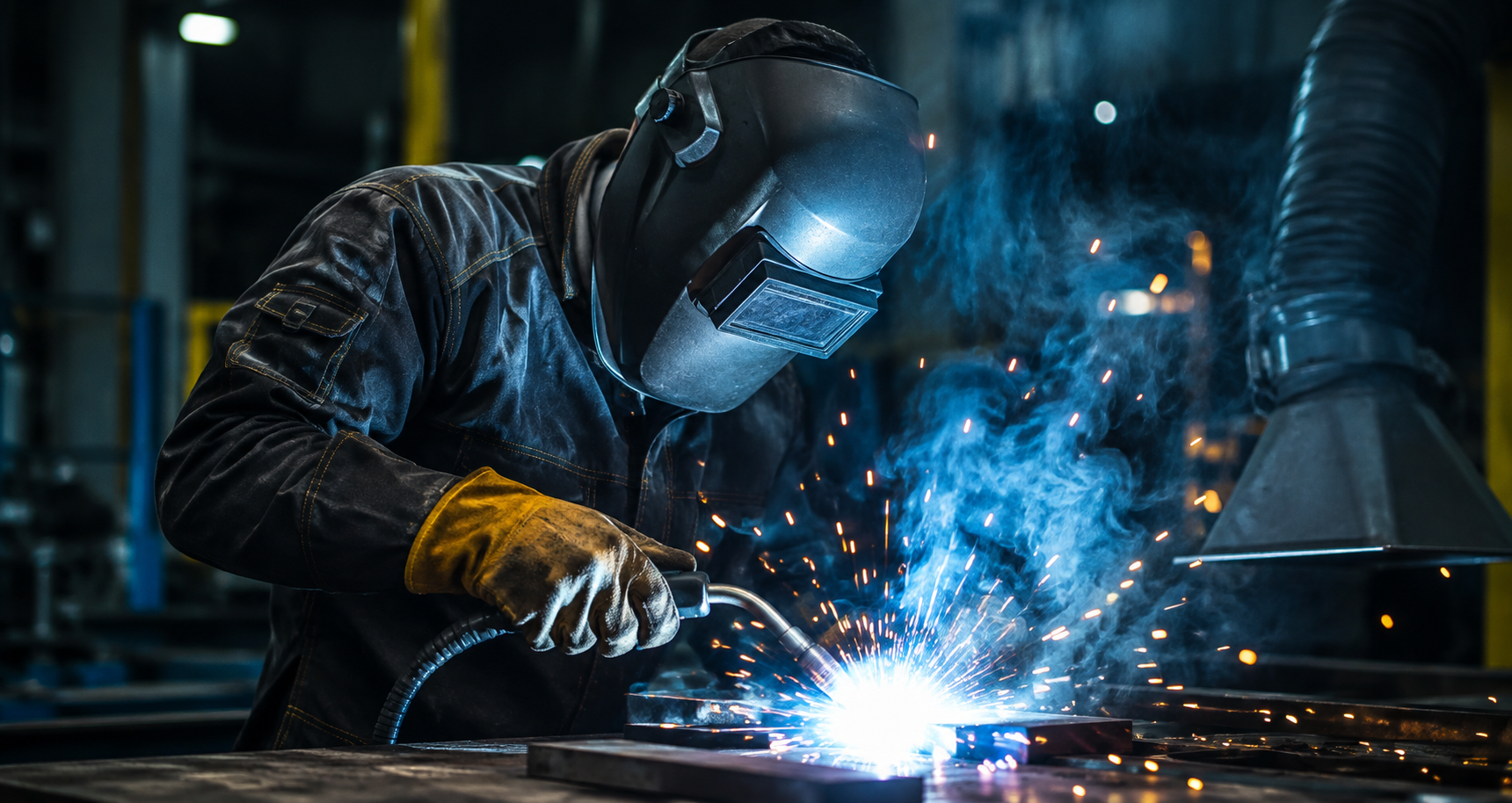
Welding applications generate extreme temperatures, spatter, radiant infrared emissions, and ultraviolet exposure. Understanding EN 407 performance classifications allows fabrication shops and pipe welders to specify the right combination of split cowhide jackets, aluminized sleeves, and Kevlar® stitched protective wear.
Decoding the EN 407 Thermal Pictogram
The standard evaluates six discrete thermal behaviors, each graded on a performance scale from 1 to 4:
- Burning Behavior (0-4): How long the material continues to ignite after contact with a flame source.
- Contact Heat (0-4): Resistance to direct contact with hot metal at temperatures ranging from 100°C up to 500°C for at least 15 seconds.
- Convective Heat (0-4): The delay before heat transfers through the garment layers.
- Radiant Heat (0-4): Ability to deflect intense thermal radiation from arc welding.
- Small Splashes of Molten Metal (0-4): Crucial for overhead and vertical welding passes.
- Large Quantities of Molten Metal (0-4): Foundry-grade defense against molten slag penetration.
Matching Apparel to Welding Process
For precision TIG welding, supple goat grain sleeves and lightweight FR cotton shirts deliver dexterity with moderate thermal deflection. In contrast, heavy FCAW and stick welding on structural bridge jobs demand heavy split cowhide jackets and full split-leather aprons with Kevlar® threading.
Need Welding Protective Clothing for your workforce?
Explore our certified commercial-grade models engineered to meet North American standards.